
Bay News Rising
Professional and college reporters training collaboratively for the future of Bay Area journalism. Bay News Rising is a project of the Pacific Media Workers Guild made possible by the labor and contributions of its members.
Your last will
By Brenda Vasquez
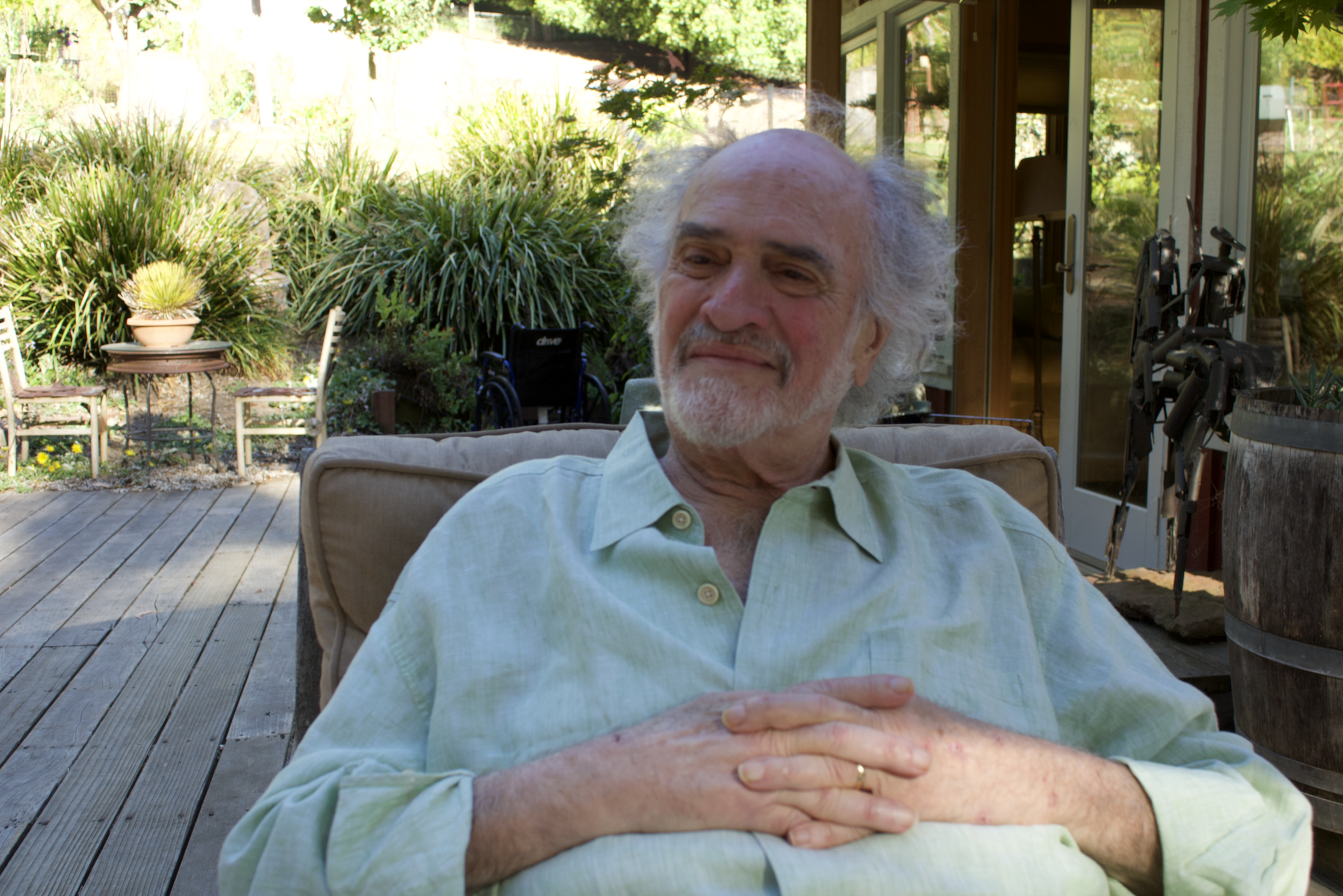
David Bigham did not understand the weight a piece of paper could carry until his partner Steve Adamo passed.
Both men had grown up in homophobic families, but built a beautiful life in Berkeley. They had been together for 12 years before Adamo died of AIDS in 1996. Same-sex marriage was not legal, and the law did not recognize their relationship; when Adamo was hospitalized, Bigham was not allowed in the hospital room.
Upon receiving Adamo’s diagnosis, they catalogued every item in their home. But they had not prepared a will. That’s when Bigham learned a hard lesson: Without a plan, the law favors blood.
“His family came down like a flock of vultures and took everything,” Bigham said.
The logistics of death and estate planning is something most people avoid thinking about.
“ Everyone hears that you’re supposed to do it and then most people don’t really do it,” said Ezra Berger, a recent fellow at UC Berkeley’s Consumer Law Center who helped organize a recent estate planning event.
But against today’s backdrop of uncertainty, estate planning has taken on new significance: More than a legal process reserved for the wealthy, it has become a practical way for people to protect their loved ones, preserve their wishes and maintain a measure of control over what they leave behind. Our rights, freedoms and future can change in an instant but death is one of life’s few certainties.
Not having a plan, Berger said, “Can turn a bad situation into a really terrible situation.”
While people’s definitions of family can vary, as Bigham found out, the default is putting your kin in charge of your medical decisions and ultimately deciding what happens to your possessions.
“It’s always going to be your blood family. It’s never going to be your friends,” Berger said. “If you’ve got a whole community that you’ve built up of non-family people that you trust and care about, those people are going to get boxed out pretty much automatically.”
When Bigham met his second partner, Howard Arendtson, in 1998, he made sure things would be different. They got married once the law allowed them to, and they found an estate lawyer, Charles Drexler.
Together, they planned how they would pass on their assets, what care they wanted toward the end of their lives and even who would take care of the couple’s 70-year-old pet tortoises, Lily and Oswald. Bigham made these plans assuming Arendtson would survive him, but after 27 years together, Arendtson passed earlier this year.
Having an estate plan made all the difference for Bigham.
“ It allows for dignity after death,” he said. “You don’t have to prove anything.”
How an estate dispute broke up ‘the Black Brady Bunch’
Drexler has dedicated nearly 50 years to helping people in Oakland plan for when they pass. Every case is different, every client has a unique story, but the goal is the same: Don’t cause irreversible harm to your future generations.
This is exactly what happened to the family of George, another client of Drexler, who lives in San Francisco and agreed to speak to us on the condition we use a pseudonym because pain and family conflicts still stem from a bitter dispute in probate court.
“ They used to call my family the Black Brady Bunch.” George said, “ We were really close growing up.”
Now he remembers the day nearly three years ago when the family’s probate court case ended.
“That’s the last time I talked to my sisters,” George said.
For years, he would ask his father if he had everything in order. His father would respond, “Son, I got it. I got that together. Don’t worry about that.”
When his father’s health started a rapid decline, George said, he discovered not much was in order. His father’s will was “about three or four pages on a steno tablet,” George said.
And his estate wasn’t simple: His father, a retired veteran, went into real estate in the early ’70s. His father’s portfolio when he died consisted of 15 properties across the Bay Area and a couple in Las Vegas.
That meant the case ended up in probate court, which Drexler explained is the process in which the court decides how to transfer assets to beneficiaries.
“The state makes sure that there’s no monkey business in the distribution of assets after your death. So there has to be a process by which things can be proven to the satisfaction of a reasonable person or the court,” said Drexler. In California, if you have less than $200,000 in assets, a will is sufficient; however, George’s father’s total assets were close to $16 million. He needed a trust.
“ If the estate planning attorney makes only a will, I would say that that’s malpractice because the will does not avoid probate,” Drexler said.
Drexler explained that an estate plan is not just about splitting up your assets, though that’s important; a main objective of estate planning is avoiding probate court and ensuring your last wishes are honored.
For that to happen, an estate plan must include six documents: a living trust, a “pour-over” will, a grant deed for property owners and a summary and certification of trust, all of which help an estate avoid probate. There are also advance health care directives that determine your quality of life, such as whether you want to be resuscitated, and a durable power of attorney for finances that allows someone to manage your finances if you become incapacitated.
Together, they’re meant to leave no question about what a person wanted.
George’s father’s last wish seemed simple: to distribute his assets equally among his four children. It was anything but. There were disagreements over who got what property, whether they should all stay in business together, multiple court dates to attend, logistics and details to figure out. George had to put his grieving on hold.
“ It didn’t give me a whole lot of time to deal with my feelings around my dad dying,” he said.
“ I wouldn’t wish it on my worst enemy,” George said of his time in probate court. “It’s just horrible. It is emotionally taxing … and the most valuable asset you lose is time.”
Estate planning isn’t just for older people
Although some of Drexler’s clients seek him late in life, he has had some younger clients as well.
Daisy Rios, 32, and Carson Welte, 33, are among them. Recently married and having purchased a fourplex in Oakland, Rios started having a lot of anxiety about Welte dying. Welte mainly manages the building and it was important for them to be able to identify support if something were to happen. “ It wouldn’t just be all on her; there would be help. We would just know who the support is going to be,” Welte said.
Welte’s parents referred the couple to Drexler, who made an estate plan for them. His mother recently passed and he witnessed how much paperwork death brought. “ My dad relied heavily on Drexler for advice and, well, guidance,” Welte said.
Rios viewed this process as “ a way to look out for your loved ones by preparing.”
“ You can’t plan when you’re going to die but you can plan what’s going to happen after you die,” Rios said.
Still, they were unfamiliar with estate planning.
“ To be honest, we didn’t really even know what it all entailed until we got into the office,” Rios said.
Estate planning is a very intimate process. For example, when putting together a health care directive, Drexler asks detailed questions about how people would want to handle a stroke, heart attack or dementia.
“ You don’t get out of my office without discussing end of life with me,” Drexler said
No question is off limits for Drexler, though one is always difficult to ask. He calls it “the bimbo provision.”
It addresses what happens to your assets if your surviving partner enters a new relationship. California is a community property state, meaning assets are owned equally by both spouses. While many people wish for their surviving partner to find love again, they often do not want their assets to pass to a new spouse, as this could reduce or eliminate their children’s inheritance. As a result, estate planning may include provisions designed to protect assets for the children.
Most spouses find this a point of contention, as they do not wish to have limitations on their assets.
“You get into a discussion that’s often very difficult,” Drexler said. “The reasons they may not have thought of it, or are uncomfortable with it, are important to explore right then and there.”
Drexler claims that there have been two or three occasions when some of these disagreements have brought up sentiments that have resulted in divorce. “ That’s part of the risk you take when you come to see me,” Drexler said.
Although some companies offer AI-driven do-it-yourself estate planning, Rios and Welte said they were drawn to the human connection of working with Drexler, and his extensive experience.
“ Drexler has insights because he’s done it over and over,” Welte said.
Good legal advice depends on understanding a client’s unique history and a deep understanding of personal relationships, Drexler said.
“ No matter how many dynamics you feed into that monster, you’re never gonna get the right one for your client,” Drexler said. “Maybe it’s possible to be replaced by data, but I doubt it.”
Like life, a person’s estate plan is adaptable. “ Nothing’s set in stone,” said Welte. Rios and Welte have a lot of life to live together and know that when they have a big life change, such as pregnancy, they can update their estate.
The estate lawyer makes his own plan
Drexler tries to provide some closure to families once their loved ones pass. He says he is “in the business of family dynamics.”
“ It’s not rare for people to want to come to my office and say, ‘Well, why didn’t I get more? What happened?’” He responds, “This wasn’t my plan. It was his plan.’”
Family has always been a central pillar for Drexler, who is now making plans for what he’ll pass on to the next generation.
As he approaches retirement, he is confident his clients are in good hands. “ My youngest daughter, Eva, ended up going to law school, graduating, passing the bar the first time,” Drexler said proudly. She is now a partner and slowly taking over his practice. Whatever the future holds for Drexler and his clients, they are prepared and confident that their wishes will be fulfilled, knowing their future generations will be protected under the Drexlers’ care.
When Drexler meets with clients to create an estate plan, he starts by asking them to tell him a story; it helps clients open up and tell him what they really care about and value in life..
Drexler’s estate plan includes items with stories of their own, like recipes his children will receive for chopped liver, latkes and matzo balls.
“They’re lucky to get ’em,” he said. There’s a clear intention in everything included in an estate plan. It’s important to preserve your legacy and how you want to be remembered.
“ When they read it, then they’ll understand where that story comes from,” he added. “It’s not just an instrument that has no relationship.”


Recent Comments